Tuesday, February 15, 2011

Pancetta Starts with P

This month's Charcutepalooza challenge was curing bacon or pancetta. I split the difference and chose the pancetta recipe but without the rolling. The fresh bacon / belly I had in my freezer was a pretty small amount - the wrong shape to roll it up into a pretty spiral. It'll taste the same anyway. And it wound up fairly pretty and round:


Apparently I should have removed the skin before curing - at least if I was going to roll it up into a cylinder which now has a curved, hard, skin on the end. Oh well. Lesson learned for next time. And there will be a next time. YUM.

I was saving my last few parsnips from the winter farmshare this season for one of my favorite dishes starring parsnips. Conveniently, it also needs pancetta. I first found a version of this recipe from Martha Stewart. (I know, I know.. but it's tasty, and simple.) Martha obviously doesn't serve this to kids in pre-k, or have the same sense of humor as I do, though, so she ignores the great alliteration potential - Pasta with Parsnips, Parmesan, Pancetta, Pepper, and Parsley. I made both the 5 year old and the other grownup laugh by pairing it with Pink grapefruit juice. "Mommy, why did you make grapefruit juice? That doesn't start with P." "Ah. But what color grapefruit did it come from?"

Thursday, February 10, 2011

Duck Prosciuitto Chicken? Duck Prosciutto Bacon.

The first project in Charcutepalooza, the one I read about just as it was happening, was duck prosciutto. Take a duck breast, cover it in salt for a day, then hang it to dry for a week, and you're done. So I headed to Sherman Market, picked up a duck breast from New York State, and gave it a try.


I wasn't particularly afraid to start making the duck prosciutto. After all, I've tried salting cod before, and this wasn't so different, plus the weather cooperated. I didn't even check that I knew where our cheesecloth was before I stuck the duck breast into the salt in the fridge overnight. (And then I didn't. Know where it was, that is. Did you know that a "turkey stuffing kit" from the supermarket contains a cheesecloth bag, twine, and bits of metal that make adequate hooks to hang up a piece of meat to dry?)


What it turned out I was somewhat afraid of was eating the duck prosciutto. You see, it's supposed to turn firmer after a day dehydrating in the salt, and then firm up as it turns into a cured meat product hanging in a cool space for a week. And it seemed different - but I've never eaten duck prosciutto, nor have I eaten anything I've cured that wasn't also meant to be cooked before eating.


Then I decided that it looked a bit like bacon, with the nice red color, the gorgeous strip of fat on one side..the not-so-thin slices I was able to make... So our first taste of the duck prosciutto was fried up bacon-style, to go along with a little french toast. Tasty, and cured-tasting like bacon. Not too crispy because I like my bacon to taste meaty anyway. But still, not the most exciting texture, and not worth buying a duck breast and then watching it cure for a week, either.


So. I had to convince myself it was really cured. A little more poking, a little more prodding, a small nibble from my husband and I , and we proclaimed it safe to eat. (Also, tasty. Pretty intense flavor, and very smooth and silky.)


For lunch I ate this salad, with some generous slices of duck prosciutto without further cooking, beets, potatoes, and tiny greens grown in a greenhouse in Westport MA, and a little vinaigrette.


I'm still here.


duck pancetta salad

Monday, January 31, 2011

Rutabaga salad

I may just be the poster child for liking just about any vegetable just about any way, but I found another simple easy root vegetable preparation for our winter root vegetable bounty the other day. I wanted to get out of the mashed rutabaga rut, even though I love them that way.

If mashing them like potatoes worked, I decided to see if boiling them like potatoes worked too. One of our potato salad standbys in this house is just to boil potatoes, then toss the potato cubes with olive oil and salt, and we also do something similar with celeriac, garlic, lemon juice, and olive oil. (and salt of course. Maybe I should title this post "fat and salt" too.) Before boiling, I peeled and cubed the rutabaga, then boiled long enough to be tender but not falling apart, tossed with a little bit of vinegar, olive oil, and salt.

Rutabaga salad

2 lb rutabaga, peeled and cubed

1 tsp dill seed

1-2 tbsp olive oil

about 1/2 tsp salt, to taste

1-2 tsp red wine vinegar


Boil rutabagas in salted water with dill seed until tender (15 or 20 minutes worked for us.) Drain, then toss with olive oil, salt, and vinegar and serve. Can be served room temperature as a salad to accompany sandwiches, or warm to accompany other warm food.

Sunday, January 30, 2011

Fat and Salt

I stumbled upon a monthly blogging project that will get me to use a bit more of my favorite new cookbook, Michael Ruhlman's Charcuterie, and now in addition to pondering it I've bought ingredients and gotten started.
The project is called Charcutepalooza, and a number of bloggers will be making cured meat, sausages, and whatnot once a month and blogging about it throughout 2011.

”CharcutePalooza”

Today I started duck breast prosciutto by putting a large raw duck breasts into a containerful of salt. (This project should have happened and been finished by 15 January, but I hadn't heard about it yet.) February's project is pancetta, which is cured and tightly rolled up bacon. I am making a smaller quantity of both of them than the recipes call for - if they turn out great I will perhaps feel silly, but if they're a disaster I will be glad not to have ruined quite as much expensive meat.

I will report on how the projects go, hopefully in time for February 15 with the pancetta...

(also posted at my shared blog at Always Be Cooking)

Thursday, January 27, 2011

spicy italian sausage

In yesterday's post I mentioned that I usually love the creative inspiration of cooking whatever I found in the box or in the fridge, and that, not the cost savings, is one of the main reasons I like to participate in our CSA.

Our meat CSA usually doesn't quite work that way - in a "best of both worlds" arrangement I get to pick and choose my meat from a larger CSA assortment of over 25 lbs of frozen meat. So I get the "ooh, yay, there's a brisket!" moments and still get to plan what meats inspire me, at least a little bit. But the last meat delivery, I got without personally going to choose things - the friend who I share the distribution asked me for some guidance and then dropped off the meat at my front door. Mostly a big favor (thanks, Megan!) but in this case, landed me with a package of hot Italian sausage - our least favorite of the sausage varieties, although I did say "I'll take some sausage, since that makes a quick easy meal."

My standby meal is to just bake the sausages with potatoes and eat them, but the spicy ones are too spicy for me to want to eat forkfuls of. (Plus, too spicy for a certain little girl to be willing to eat at all.) I'm pleased with how I've wound up using it as in ingredient so far, though.

Step 1: I cooked the sausages plain in a covered cast iron frying pan on medium-low heat. (This gets the skins nicely browned and crispy but by covering the pan, contains enough heat that they cook through, if you do it patiently.) This makes fully cooked sausage ready to add to whatever you want.

The first one was sliced into a quart of potato leek and arugula soup that I had previously frozen - small bits of sausage added plenty of protein, and the seasoning was subtle.

The second one went into some very quick burritos. Yes, they were supposed to be "Italian" but mostly they are just the right level of spicy to read as a spicy Mexian sausage if one isn't shooting for authentic - chopped into cubes, reheated with leftover cooked squash and some garlic, and put into some flour tortillas with cheese melted on them along with salsa and Greek yogurt-as-sour-cream.

The third one will probably get sliced onto a pair of sandwiches, maybe with roasted red pepper and sauteed onion if I am feeling inspired.

Wednesday, January 26, 2011

market analysis: summing it all up

Happy New Year! It's winter, and we're well into our winter farmshare, and I ran out of steam for this project, but I didn't lose the data. So here concludes the summing of the market analysis for 2010.

November 11, Week 22

1 bunch kale - $2.50
1 stalk brussels sprouts - $2.50
1 huge bunch celery $2
2 leeks, $1 ea, $2
1 lb 4 oz purple cabbage, $2/lb $2.50
1 lb 13 oz beets, $2/lb, $3.62
1 lb 12 oz carrotsm $1/lb $1.75
5 lb 10 oz butternut squash, $1.80/lb, $10.12
2 watermelon radishes, $2/lb, 13 oz $1.62
Total : $28.61

November 17, the last double share (intended for weeks 23+24)

Pie Pumpkin 4lbs $6
Butternut Squash 2.75 lbs $4.12
Parsnips 2lb $4.00
Carrots 2.5 lbs $2.50
Celeriac 1lb (this was $5/lb at the farmer's market!) $5
Turnups 2.25lbs $4.50
Beets 2lbs $4
Sweet potatoes 3lbs (2 of it in one potato!!!), $1.50/lb, $4.50
Onions .75 lb, $1/lb, $.75
Garlic .25lb, $8/lb $2
Potatoes, white 2.5lbs, $1/lb, $2.50
1 stalk brussel sprouts, $2.50
2 leeks 1.25 lbs, $2
1 bunch kale $2.50
1 bunch collards $2.50
Cabbage 1 lg head (>5lbs) $5
Total : $54.37, or $27.18 per week

The final savings for the season comes out to just over $170 - we paid $510 for the season, and if we'd gone to the farmer's market each week armed with this shopping list we would have spend around $680 instead.

In reality, we wouldn't have *actually* done that - for one thing, these precise items weren't all available at the same market every single week. Sometimes we were getting something for weeks at the farmshare that I could not find at any local market that week. Sometimes prices were crazy, e.g. the $5 celeriac at the end of the market, and I would have done without. Sometimes the farm gave us a huge amount of something that we managed to use but that would not have been on my shopping list for the week. And often if I'd bought a particularly large amount of vegetables the week before and could take a break for a week and buy less, I probably would have opted to do that. But if you really are going to buy a giant quantity of vegetables every week for 24 weeks, and want those vegetables to be local and seasonal, the CSA offers a pretty clear savings.

Later, I'll talk a bit more about other benefits we've found to having a CSA, and hopefully get some posts up here that aren't about the market analysis project now that it's actually finished.


Friday, November 5, 2010

Market Analysis - Catching up through week 21

Yesterday we picked up Week 21 of the farmshare. Our CSA runs all the way through the week before Thanksgiving, when we get a "double share" so they don't have to make a delivery during Thanksgiving week and people can plan their harvest meals a bit further in advance.

Here's a rundown of many weeks of vegetables since the little guy was born.
The weights and amounts of vegetables are real. The prices are largely based on interpolation between a few farmers' markets visits, a few good guesses on things I didn't run across at the market on the weeks I went, etc. We have managed to get (and either eat, or store) our vegetables each week, but I have not been religiously going to the farmers market somehow...

9/30 - week 16
1 bunch toscano kale - $2.50/bunch
bagged lettuce mix - $4/bag
1 bunch arugula - $2.50/bunch
3 lb 2 oz potatoes - $2/lb $6.25
1 bunch celery, 1lb 1oz - $2/bunch - $2
11oz broccoli - $3/lb - $2
3 lb 10 oz carnival squash - $1.80/lb - $6.50
2 leeks - $1/ea - $2
1 lb daikon - $1.50
1 lb tomato - $2.50
3hot peppers - $0.75
Total: $32.50

10/7 – week 17

bunch of kale - $2.50
bunch of baby bok choy - $1.50/ba
bagged lettuce - $4
2 lbs potatoes - $2/lb - $4
.25lb red onion - $1/lb - $0.25
.25lb garlic - $8/lb - $2
1.5lb carrots - $1/lb - $1.50
3lbs buttercup squash - $1.80/lb - $5.40
1lb eggplants - $1.50/lb - $1.50
total: $22.65

10/14 – week 18
1 bunch dino kale - $2.50
1 bag salad greens - $4
1 bag spinach $2.50
2 lb 1 oz delicata squash (3) - $1.80/lb - $3.70
1 lb 3 oz green peppers (6) - $3/lb - $3.56
3 lb 9 oz cauliflower - $2.50/lb - $8.90
12 oz broccoli - $3/lb - $2.25
1 lb turnip - $2/lb - $2
2 leeks - $1/ea - $2
1 lb 5 oz celery (1 bu) - $2
2 lb 5 oz carrots - $1/lb - $2.13
Total: $35.54

10/21 - Week 19
1 lb 5 oz cauiflower - $2.50/lb - $3.28
3 green peppers (1 lb) -$3
1 bunch kale - $2.50
1 head escarole - $2.50
15oz beets - $2/lb - $1.87
6 oz turnip - $2/lb - $0.75
4 lb 3 oz squash – Japanese pumpkin - $1.80/lb - $7.50
3lb cabbage - $1/lb - $3
5 oz garlic - $8/lb - $2.50
2 lb 13 oz potatoes - $2/lb - $5.60
Total: $32.50

10/28 – Week 20
14 oz broccoli - $3/lb - $2.62
2lb celery - $2/bu - $2
1 bunch arugula - $2.50
1 bunch collards - $2.50
2 leeks - $1/ea - $2
2lb 6oz sweet potato - $2.60/lb - $6.17
1 lb 12 oz rutabaga - $2/lb - 3.50
4 lb 6 oz pie pumpkin - $1.80/lb - $6.56
1 lb 10 oz carrots - $1/lb - $1.62
Total: $29.47

11/4 – Week 21
1 lb 14 oz giant brussel sprouts (more than 2 pint containers, but these were weird sized) - $3/pint - $6
1 lb 5 oz celeriac - $2/lb - $2.62
1 bunch red kale - $2.50
14 oz daikon radish - $2/lb - 1.75
10 oz beets - $2/lb - $1.25
2 lb delicata squash - $1.80/lb - $3.60
7 oz red onion - $1/lb - $0.50
10 oz garlic - $8/lb - $5
3 lb 4 oz potatoes $3.25
Total: $26.47

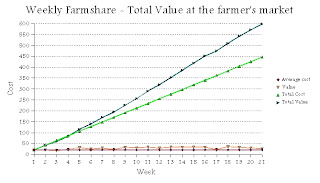
The resulting savings has just crossed the $150 mark this week!

And the resulting plots -