
When the farmshare arrives each week, I take a quick inventory of what's still in the fridge from the last week, and what's just arrived, and make a sort of "reverse shopping list" of what produce needs using, and what's most urgent.
I like to cook on the fly, for the most part - I'm certainly not one to stick to a weekly meal plan made out in advance. But I am always checking up mentally with what's in the fridge, what the weather's looking like, whether we've got many dinners out coming up, what leftovers we should be eating soon, and so on. And I tend to have a queue, at least in my head, of some meals I plan to make in the next few days. This week, for example, the use-up list includes zucchini with many exclamation points. Some of it got grilled, some of it will go into zucchini bread (enough to freeze), some might go into an omelette or another batch of grilling, and some might get shredded and frozen on its own. The collards got steamed to make them less urgent, but I'm thinking of making a one-pot sautee meal I often make with collards, chicken/sausage/pork, onions, and BBQ sauce. The chinese cabbage went to a potluck, the cucumber will go into a test batch of kosher dill pickles. The tomato didn't even go on the use-up list but it did get devoured - twice with sandwiches and a 3rd meal over pasta with leftover grilled zucchini and grilled sausages. And if I don't have a plan, I recheck our reverse shopping list before deciding what to cook, with a goal of making sure we eat at least one leftover item or farmshare item that's on the list.
So that's a bit of my version of "planning" around a fridge full of food. What's yours?
Monday, July 19, 2010

Thursday, July 15, 2010
Market Analysis: Week 5
Unpacking this week's box:

1 lb 13 oz Green Cabbage: ($1/lb) : $1.80
5 lb Zucchini ($2/lb) : $10
Dill: $0.50
2 lb 3 oz Pickling Cucumbers: ($2/lb) : $4.40
1 bunch Scallions: $2
1 bunch carrots: $3
1 head radicchio: $3
13 oz tomatoes: ($3/lb) $2.40
giant head Lettuce: $2.50
Collard Greens: $2.50
Total: 32.10, a good $10 above the average box cost. That's quite a bumper crop of zucchini. I did go with a $2/lb price of zucchini - lots of stalls had it for different prices. There were a few vendors who sold it cheaper but they definitely use pesticides (in a limited way, but still, not quite comparable to our CSA) and one who sold it more expensively than the price I went with.
And the plot from this week:

Leftover from last week, we have half a bunch of scallions, a few of the zucchini, and a fair bit of Chinese cabbage, which I intend to turn into more salad or some spring rolls to bring to a BBQ this weekend. With 5 lbs of new zucchini, I think I'll be taking my own advice and making and freezing some zucchini bread very soon!
Warm Food
I'd be exaggerating if I called this an inspired seasonal recipe using vegetables that go wonderfully together and are likely to come in your farmshare box this month.
Actually, what happened is that I wanted to do something with the fennel other than cut it up and serve it over salad. Fennel is seasonal right now. It came in our box this week, and I like it, but I've never actually tried to cook it before.
So I browsed through some of my cookbooks and found a recipe that sounded great, for braised fennel and celeriac. Celeriac, or celery root, is not at all seasonal right now. It's a late fall root vegetable that stores well over the winter in a root cellar.
Well, my squirrel tendencies and our winter storage share came to the rescue - I was saving that last celeriac, the last item remaining item from our winter share, in the vegetable drawer. I kept telling myself that it was small and I'd work on using it up when we seemed like we might run of room to put away the share one of these weeks.
So I was able to combine celeriac and fennel in this recipe, adapted from Claudia Roden's Book of Jewish Food. Sometimes, things that aren't in season together and seem to have very different styles make a surprisingly wonderful pairing!
Braised Celery and Fennel with Lemon
3 garlic cloves, chopped
1 tbsp light vegetable oil
1 small celeriac, about 1/2 lb, peeled and cut into ¾-inch cubes
1 medium fennel head, cut in half, then in thick slices
Juice of 1 lemon
1 tsp sugar
Salt and black pepper
In a wide pan with a cover, fry the garlic in the oil till lightly colored. Add the celeriac and fennel, and add water to barely cover. Add the lemon juice, sugar, and a little salt and pepper, and simmer with the lid on, stirring occasionally, for 1/2 hour. Then take the lid off, increase the heat and reduce the liquid to a thick sauce.
You could serve this as a cold salad mixed with parsley, but since it was wet and rainy and we felt like warm food, we served it warm, over some quinoa that I cooked in the rice cooker with 3 parts water and 1 part pineapple juice. The slight sweetness that the juice added to the quinoa was just right with the celeriac and fennel over the top.
Saturday, July 10, 2010
Cold Food
Some of this food did require a bit of cooking, but after a week of avoiding any use of flame in the kitchen I was going crazy. Also, I think I may have acclamated to the heat a bit.
In the end we wound up with a meal we could stand to eat in the 88 degree dining room.
Last night's menu:
Bread (I do not recommend baking your own bread when it's hot out, but guess who did?)
Hummus (from a friend who had too much), doctored with lemon juice and chopped basil that came from our farm.
Garlic scape pesto, leftover in the fridge. I'm surprised I haven't tried this before this year! Recipe below.
Raw kale salad. I made a batch of this last night when it was also too hot to cook, but last night I couldn't come up with something else to accompany it so we had takeout chicken fingers.
Raw turnip and apple salad. I've been hoarding these because I love them so much despite having plenty of other food in the CSA box that needs cooking, and today I realized I'd better start using them even if it's not always for sauteed turnips. So today one large turnip went into this salad. Recipe below.
Beet Tzatziki. A creamy salad with cooked, grated beets, garlic, lemon, dill, and yogurt. This one involves boiling water for a while but it's so worth it. Recipe below.
Beet Tzatziki
Inspired by Sofra restaurant, adapted from Spice: Flavors of the Eastern Mediterranean, by Ana Sortun, based on this adaptation.
3 baby beets
3 tiny cloves pressed garlic
juice of about 1 lemon
Salt
1/4 cup sour cream plus 1/4 cup regular yogurt (take the thick part, if you can, instead of blending the liquid back in) This substituted for Greek yogurt, which is what I've used before.
1/2 tablespoon extra virgin olive oil
2 tablespoon schopped fresh dill
Black pepper
Mix, taste, and leave covered in the refrigerator at least 1 hour before eating.
Raw Turnip and Apple Salad
based on Farmer John's Cookbook: The Real Dirt on Vegetables
1 peeled, grated granny smith apple
1 peeled, grated Hakurei turnip
juice of 1/2 to 1 lemon
1 tbsp olive oil
1/4c raisins
2 tsp chopped fennel fronds
salt and pepper to taste
Mix, taste, and leave covered in the refrigerator at least 1 hour before eating.
Garlic Scape Pesto
10-12 garlic scapes, chopped into 1" pieces
1/4 cup ground almonds
1/3 cup Parmesan cheese
1/2 cup olive oil
salt and pepper to taste
In a food processor, combine scapes, almonds, cheese and some of the olive oil. Blend until combined. Add remaining olive oil, scraping sides occasionally. Eat, or store in a jar in the fridge (or freezer, supposedly, but I haven't tried that yet.)
Thursday, July 8, 2010
Market Analysis: Week 4
Here's this week's box!

3 lbs zucchini ($2/lb, $6)
1 bunch bok choy ($3)
1 head napa cabbage ($2)
1 head fennel ($3)
1 bunch scallions ($2)
1 giant head lettuce ($2)
1 bunch swiss chard ($2)
1 small bunch garlic scapes ($2)
1 bunch basil ($2)
Total value: $24
After the week 3 blip we're still catching up, and so far we're staying within a few dollars of what it would have cost to buy these boxes as the farmers market.

"Inventory control" this week wasn't so good. It's been too hot to cook all week, but that means we used up the most perishable greens and scallions that are best to eat raw, as well as inventing several ways to eat zucchini raw. We went through a lot of napa cabbage, but there's still plenty of it. (And look what arrived today! MORE napa cabbage!) So we are still working our way through many of the other items from last week. But I always feel like we're ahead of the game as long as it fits in the refrigerator drawers.
adventures with cabbage
We got a giant head of napa cabbage two weeks ago, and then before it was finished we got another one last week. So I've been on a quest to use up the cabbage creatively that ended up in a recipe I'm pretty happy with.
the basics:
for every 4 cups of sliced napa cabbage
2 tbsp balsamic vinegar
1 tsp soy sauce
1 tsp sugar
1/2 tsp salt
1 tsp sesame oil
1 tbsp plain vegetable oil (we use safflower, but you could use canola, sunflower, etc.)
I don't usually measure while I'm making salad dressings, so taste this and feel free adjust a little to taste - more sugar if it's too sweet, more soy sauce if it's not salty enough, more sesame oil if you can't taste it, etc.
the rest:
Add whatever else inspires you (or whatever else you've got too much of in the fridge!) to the salad. Last night's version had some sliced sugar snap peas, some shredded arugula, and some scallions. If you want to make it a main dish, you could add the protein of your choice and more vegetables with a little more density than cabbage and leafy greens.
Which brings me to another tip - in addition to finding simple recipes you like with a vegetable you have a lot of, sharing it with friends is a great way to use more of it before it gets a little repetitive on your table. Last night's cabbage salad went to a potluck dinner. We've got about 2 servings left, and it keeps well enough that they should work for tonight's dinner.
Sunday, July 4, 2010
Fresh Spring Rolls, or Anything But Salad
At our CSA farm, it's the season for Chinese cabbage. Apparently this crop does well in their soil and microclimate, because I seem to remember getting HUGE heads in the past and this year is no different.
Chinese cabbage is good in stir fries (too hot) or salads (getting a bit boring, working our way through the 2nd large head). I even managed to distribute some of it to my daughter's preschool class, doing a visiting "show and tell" where we guessed all the vegetables in the CSA box, and passed things around to touch, smell, and observe. It was a big hit at snacktime that morning! But we still have plenty left.
So today I remembered another hot-weather meal that's great for cabbage and for a hot day - fresh spring rolls. These are the kind you might have tried at a Vietnamese restaurant, in a translucent wrapper with lots of fresh vegetables and perhaps some shrimp or chicken inside, a few mint or basil leaves, and a dipping sauce or two.
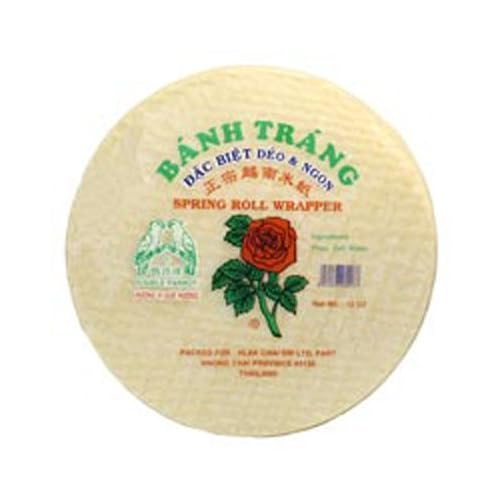
You'll probably need to go to an Asian supermarket to get the rice paper wrappers, but it's well worth it for a hot weather meal that can be adapted to anyone's tastes and requires little to no cooking. The wrappers look like this:

To cook them, you can just microwave some water until it's hot but not too hot to stick your hands in, and pour into a shallow bowl. You dip one wrapper in until it feels soft, then carefully pull it out and spread on a plate.
Then, for fillings, you'll want shredded cabbage, maybe some slices of leftover meat or some little sticks of tofu, shredded carrot or thinly sliced scallion, cucumber, anything that strikes your fancy! We used some leftover deli turkey, scallions, and quick sauteed matchtsticks of zucchini and hakurei turnip as well as the cabbage.
The dipping sauces are something else you might find at the Asian Market or you can mix up yourself: vinegar and sugar and fish sauce, black bean paste and vinegar, peanut butter thinned out with water and vinegar, etc.
Chinese cabbage is good in stir fries (too hot) or salads (getting a bit boring, working our way through the 2nd large head). I even managed to distribute some of it to my daughter's preschool class, doing a visiting "show and tell" where we guessed all the vegetables in the CSA box, and passed things around to touch, smell, and observe. It was a big hit at snacktime that morning! But we still have plenty left.
So today I remembered another hot-weather meal that's great for cabbage and for a hot day - fresh spring rolls. These are the kind you might have tried at a Vietnamese restaurant, in a translucent wrapper with lots of fresh vegetables and perhaps some shrimp or chicken inside, a few mint or basil leaves, and a dipping sauce or two.
You'll probably need to go to an Asian supermarket to get the rice paper wrappers, but it's well worth it for a hot weather meal that can be adapted to anyone's tastes and requires little to no cooking. The wrappers look like this:
To cook them, you can just microwave some water until it's hot but not too hot to stick your hands in, and pour into a shallow bowl. You dip one wrapper in until it feels soft, then carefully pull it out and spread on a plate.
Then, for fillings, you'll want shredded cabbage, maybe some slices of leftover meat or some little sticks of tofu, shredded carrot or thinly sliced scallion, cucumber, anything that strikes your fancy! We used some leftover deli turkey, scallions, and quick sauteed matchtsticks of zucchini and hakurei turnip as well as the cabbage.
The dipping sauces are something else you might find at the Asian Market or you can mix up yourself: vinegar and sugar and fish sauce, black bean paste and vinegar, peanut butter thinned out with water and vinegar, etc.
Subscribe to:
Posts (Atom)